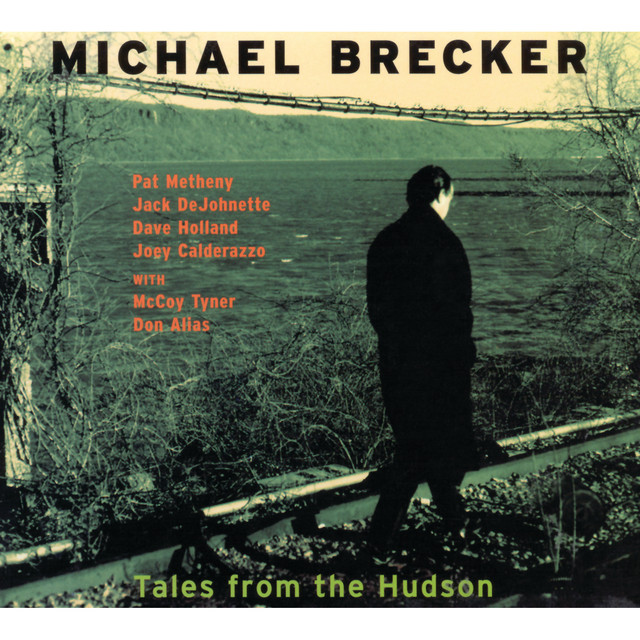
Tales from the Hudson
Michael Brecker · 1996 · Impulse!
Tracks
Personnel
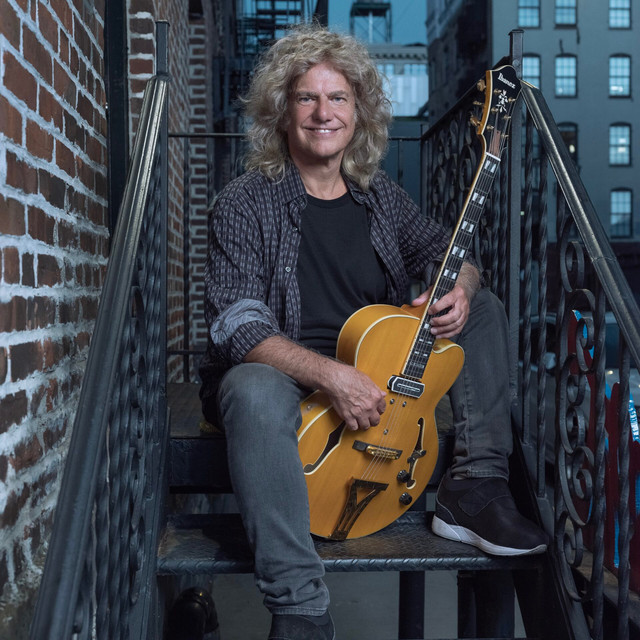
Pat Metheny
played Guitar / Co-Producer / Synthesizer on this album
Metheny joined at Brecker's invitation, contributing guitar and guitar synthesizer on two tracks while also co-producing the album. On those tracks, his guitar synthesis creates a distinctive tonal dialogue with Brecker's own EWI.

Metheny
On Pat Metheny's ECM date 80/81 (1980), two tenors stood side by side: Michael Brecker, by then a fusion and pop studio staple, and Dewey Redman, straight out of the free-jazz lineage. Pairing the studio ace with the avant-garde tenor was the whole point of the record.
Pat Metheny first heard Michael Brecker's tenor not on a jazz record but on a pop hit pouring out of a car radio at a big intersection. The two would later become close collaborators — but the introduction came over the airwaves, through pop.
Pilgrimage (2007) was the last record Michael Brecker made, cut while he was dying. Pat Metheny, who played guitar on it, said Brecker had never sounded better—that a new element, a kind of seriousness in every gesture, had entered his playing. The illness deepened it rather than thinning it out.
In 1976, a still largely unknown Jaco Pastorius played bass on Joni Mitchell's folk album Hejira — the same year he released his own debut and joined Weather Report. His avant-garde fretless playing found its way onto one of the era's defining singer-songwriter records.
Dave Holland and Jack DeJohnette first played together at a 1967 jam session in London, where Holland says it felt complete from the very first beat. Three years later both names sit in the credits of Bitches Brew (1970). The pairing was not assembled in a New York studio; it had already clicked on the other side of the Atlantic.
Drummer Jack DeJohnette, who played in Miles Davis's early-1970s electric bands alongside Chick Corea and Dave Holland, once said their improvising would go to "totally ecstatic" places — until Miles stepped back in and pulled everything back to a single center. The band's apparent freedom, in other words, actually orbited Miles himself.
On 80/81 (1980), Michael Brecker — then the most in-demand studio saxophonist in New York, and heard as a fusion player — is trading with Dewey Redman and Charlie Haden, both out of the free jazz world. Pat Metheny wrote all of the material.
Don Alias was brought to Bitches Brew (1970) as a percussionist, but on "Miles Runs the Voodoo Down" he is the one at the drum kit — the New Orleans-flavored beat was his idea, and the leader told him to play it himself.
Featured in Episodes
Featured in Notes
Around 1996


