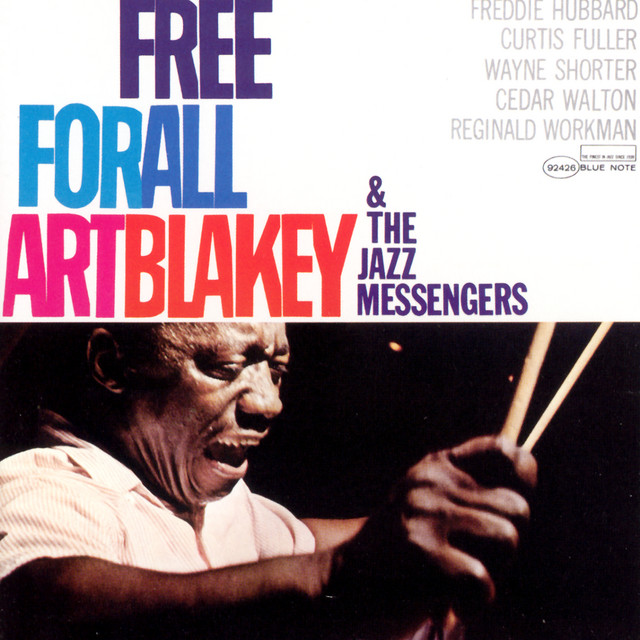
Free for All
Art Blakey · 1964 · Blue Note
Personnel
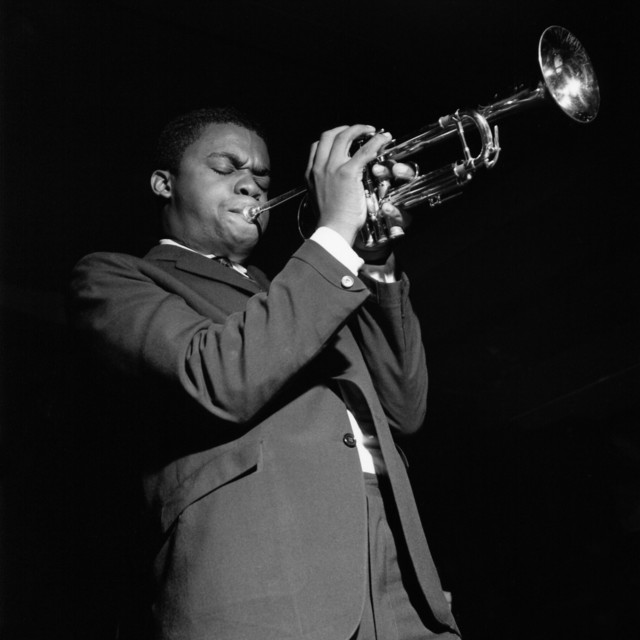
Freddie Hubbard
played Trumpet on this album
Recorded in February 1964, as Blakey's ferocious drumming pushed the band to the edge of free jazz, Hubbard met the pressure head-on. The studio session crackles with the energy of a live performance.
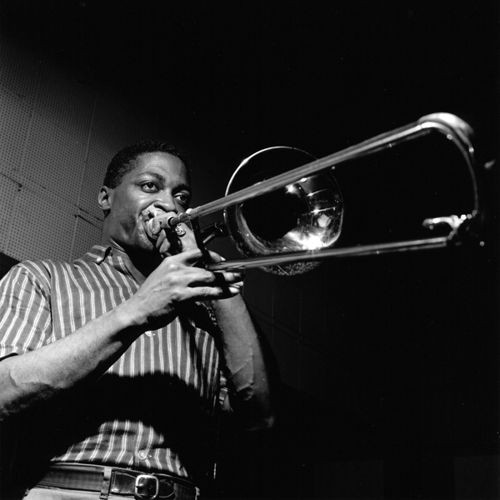
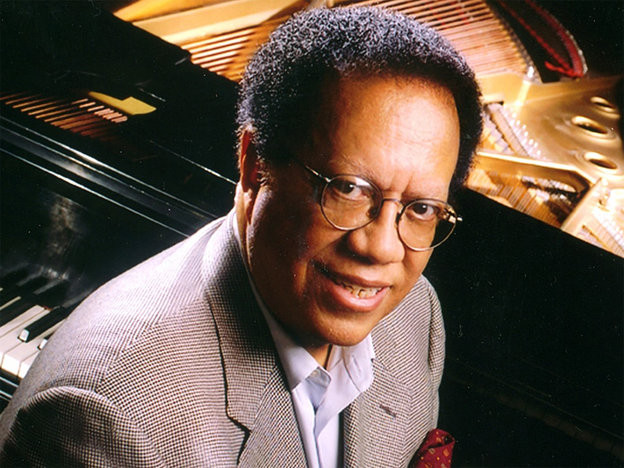
Reggie Workman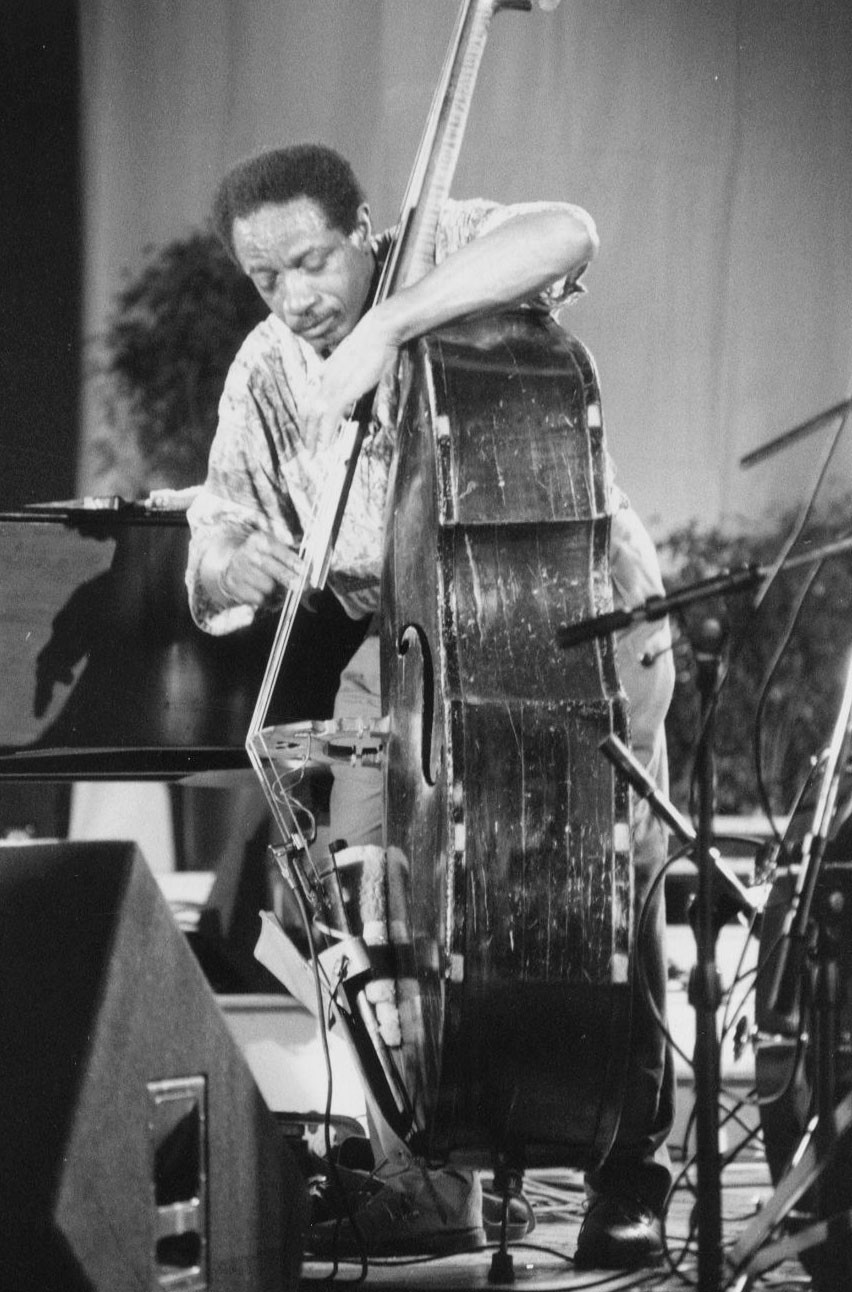
On Free for All
Freddie Hubbard's 1970 CTI track 'Red Clay' was written to order after a producer told him to 'write a hit.' Hubbard recalled that his fellow jazz musicians sneered at him for writing something so corny — yet the commissioned tune became the record he's best remembered for.
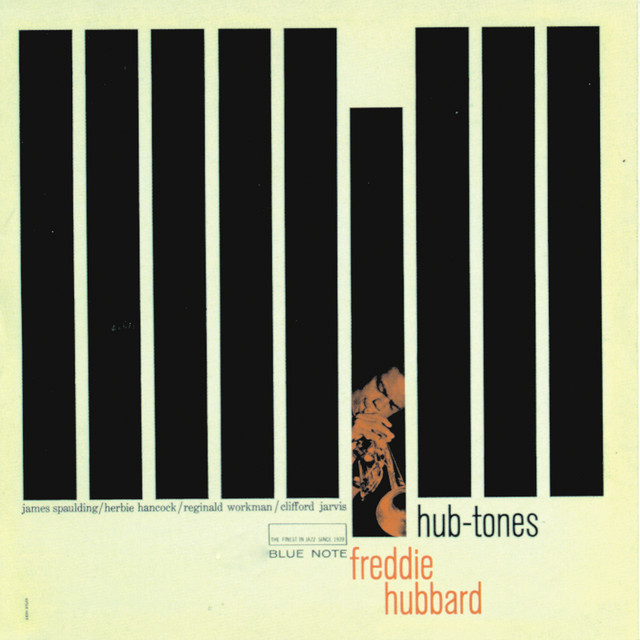
Freddie Hubbard, the lyrical hard-bop trumpeter of Hub-Tones, also turns up on Ascension, the 1965 wall-of-sound free-jazz session. The tidy melodist standing inside the most extreme date of the era is the surprise.
Moanin' (1958) first appeared under the plain eponymous title 'Art Blakey and the Jazz Messengers.' The opening tune, written by pianist Bobby Timmons, caught on so widely that the whole record came to be known by its name — the sideman's song, not the leader's, gave the album its title.
In 1961, pianist Cedar Walton brought his new composition "Mosaic" to a rehearsal with Art Blakey's Jazz Messengers. He later said the horn players—Freddie Hubbard, Curtis Fuller, and Wayne Shorter—devoured the tune "like eating cornflakes," playing it better than he could himself.
In the 1960s, Freddie Hubbard was constantly measured against fellow trumpeter Lee Morgan every time he took the stand. He later said that pressure, rather than wearing him down, was exactly what kept him pushing forward.
The 1961 album Mosaic is filed under Art Blakey's name, but the title tune was written by the pianist, Cedar Walton. The record everyone remembers as the bandleader's takes its name from the small print.
Featured in Notes
Around 1964